

 Lets Talk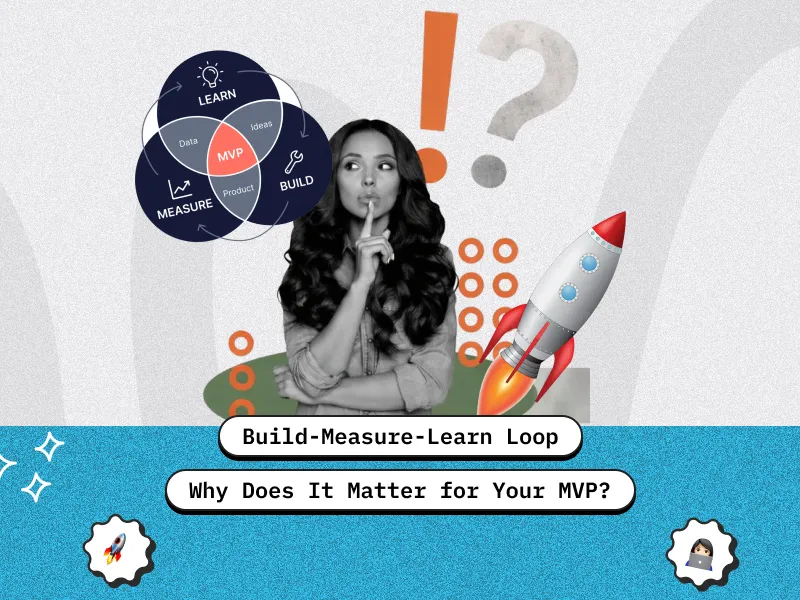
TL;DR
- The Build-Measure-Learn loop is a product development framework that helps startups test ideas quickly.
- It focuses on building an MVP, measuring user behavior, and learning from real data.
- The approach helps startups validate ideas before investing heavily in development.
- By repeating the loop, teams can improve their product through continuous iterations.
- It reduces the risk of building products users do not need.
- The framework helps startups reach product-market fit faster.
Introduction
Startups often face uncertainty when building new products. Many promising ideas fail not because they lack potential, but because they are developed without validating real user needs. This is where the Build-Measure-Learn Loop becomes an essential framework for modern product development.
The concept was popularized by Eric Ries in the book The Lean Startup, where he introduced a systematic way for startups to test ideas through experimentation and continuous learning.
For startups building a Minimum Viable Product (MVP), the Build-Measure-Learn Loop provides a practical method to validate assumptions, gather real user feedback, and improve the product based on data rather than guesswork. Instead of spending months developing complex features, teams can launch small product experiments and learn what actually works.
In this article, we’ll explore how the Build-Measure-Learn Loop works, why it matters for MVP development, and how startups can use it to build better products faster.
Why the Build-Measure-Learn Loop Matters for MVP Development
For startups, building a product without validating assumptions can lead to wasted time and resources.
The Build-Measure-Learn Loop helps avoid this by focusing on data-driven decision-making. Each stage of the loop provides insights that guide product improvements.
Using this framework during MVP development helps startups:
- Reduce product development risk
- Validate product ideas early
- Identify what users truly need
- Improve the product continuously
This process helps startups move closer to product-market fit.
Build: Developing a Minimum Viable Product
The first step in the loop is building a Minimum Viable Product (MVP).
An MVP is a simple version of a product that includes only the essential features required to test a core idea. The goal is not to build a perfect product but to create something that allows startups to collect real user feedback as quickly as possible.
Before building an MVP, startups should clearly define their product goals, target users, and key MVP planning prerequisites to ensure the product is built on the right assumptions.
For example, a startup building a productivity tool might release an MVP that includes only basic task creation and tracking features. This allows the team to test whether users actually find the product valuable.
Measure: Tracking User Behavior and Product Performance
After launching the MVP, the next step is to measure how users interact with the product.
This involves collecting data that reveals how users behave within the product and which features they find most useful.
Common data points include:
- Number of active users
- Feature usage frequency
- Conversion rates
- User engagement levels
By analyzing these metrics, startups can determine whether their MVP is delivering real value to users.
Learn: Using Insights to Improve the Product
The final stage of the loop is learning from the collected data.
In this phase, startups analyze the results from user behavior and feedback to determine what should happen next. Learning from real users helps teams use user feedback in MVPs to make better product decisions and improve future product iterations.
There are typically two outcomes:
Iteration:
Improving the product by refining existing features or adding new ones based on user feedback.
Pivot:
Changing the product strategy when the data shows the original idea may not be effective.
This learning process helps startups gradually develop a product that aligns with user needs.
How to Apply the Build-Measure-Learn Loop to Your MVP
Step 1: Identify Assumptions and Hypotheses
Every startup idea is based on assumptions. Before building an MVP, startups should identify the key assumptions that need to be validated.
Examples of common assumptions include:
- Users have a specific problem that needs solving
- Users are willing to pay for a solution
- A particular feature will provide value
Turning these assumptions into testable hypotheses helps guide the MVP development process.
Step 2: Build a Simple MVP to Test the Idea
Once the hypotheses are defined, startups should build a simple MVP designed specifically to test those assumptions.
The MVP should focus only on the core functionality needed to validate the idea while maintaining a clear and simple MVP UX design that supports early user testing..
Keeping the product simple helps startups launch faster and begin collecting insights sooner.
Step 3: Measure Key Product and User Metrics
After launching the MVP, startups must track relevant metrics that indicate product performance.
Key metrics may include:
- User sign-ups
- Feature usage
- Retention rates
- Customer engagement
These insights help startups understand whether the product is solving the intended problem.
Step 4: Analyze Insights and Decide Whether to Pivot or Iterate
Once sufficient data has been collected, startups must analyze the results.
If users respond positively, the team can continue improving the product through iteration.
If the results indicate that the product is not meeting user needs, the startup may need to pivot and explore a different approach.
Key Metrics to Measure in the Build-Measure-Learn Cycle
User Engagement Metrics
User engagement metrics help startups understand how actively users interact with the product.
Examples include:
- Daily active users
- Session duration
- Feature interaction rates
High engagement often indicates that users find the product valuable.
Activation and Retention Metrics
Activation and retention metrics show whether users continue using the product after their first interaction.
Examples include:
- Onboarding completion rate
- Weekly or monthly active users
- User retention after a certain time period
Strong retention suggests that the product is solving a meaningful problem.
Customer Feedback and Satisfaction Metrics
Quantitative metrics are important, but direct user feedback provides deeper insights.
Startups can gather feedback through:
- Surveys
- User interviews
- Feedback forms
- Support conversations
These insights help teams understand user expectations and improve the product experience.
Real-World Examples of the Build-Measure-Learn Loop
The Build-Measure-Learn Loop is widely used by successful startups to validate ideas, test features, and improve products based on real user feedback. Here are a few real-world MVP examples.
Dropbox – MVP Validation Example
Before building the full product, Dropbox created a simple explainer video showing how their cloud storage solution would work. This video acted as a lightweight MVP to test demand.
By measuring user sign-ups and interest after the video launch, the team learned that many people wanted the product. This validated the idea before investing heavily in development.
Airbnb – Early Marketplace Experiment
In the early days, Airbnb founders tested their idea by renting out air mattresses in their own apartment to conference visitors. Instead of building a complex platform first, they validated whether people were willing to pay for short-term home stays.
The feedback and bookings helped them learn that the concept had real demand, which led them to gradually build the full platform.
Spotify – Continuous Product Iteration
Spotify applied the Build-Measure-Learn approach by launching early versions of its music streaming platform and continuously improving features based on user behavior.
By measuring listening patterns and engagement metrics, the company learned which features users valued most, leading to innovations like personalized playlists and recommendation algorithms.
Common Mistakes Startups Make With the Build-Measure-Learn
Building Too Many Features Before Testing
Many startups make the mistake of building numerous features before launching their product. This slows down experimentation and delays valuable feedback from users.
Instead, startups should focus on building the simplest version of the product that can test their assumptions and avoid mistakes when building an MVP
Tracking Vanity Metrics Instead of Actionable Metrics
Some startups track metrics that appear impressive but do not provide meaningful insights.
Examples include:
- Total downloads
- Social media followers
Instead, startups should focus on actionable metrics such as engagement, retention, and conversion rates.
Ignoring User Feedback During Iteration
User feedback is one of the most valuable sources of product insight.
Ignoring this feedback can lead to product decisions that do not align with real user needs.
Successful startups continuously gather and analyze user feedback during each iteration.
Best Practices for Using the Build-Measure-Learn Loop Effectively
Focus on Solving One Core Problem
Startups should concentrate on solving one major problem rather than trying to build a complex product from the beginning.
A focused MVP allows for faster experimentation and clearer insights.
Use Short Development and Testing Cycles
One of the most effective MVP testing strategies is keeping development cycles short so startups can test ideas quickly and gather feedback faster.
The faster the loop runs, the quicker teams can learn and improve the product.
Continuously Gather and Analyze User Feedback
Successful startups consistently collect user insights through analytics tools, surveys, and user interviews.
This continuous feedback helps guide product improvements and ensures the product evolves according to real user needs.
Conclusion
The Build-Measure-Learn Loop is a powerful framework that helps startups build better products through continuous experimentation and learning. By launching simple MVPs, measuring user behavior, and using insights to guide improvements, startups can reduce development risks and validate product ideas more efficiently.
This iterative approach allows teams to move closer to product-market fit while minimizing wasted effort and resources.
Many startups also partner with an experienced MVP development company to implement the Build-Measure-Learn approach effectively. With the right development expertise, startups can run faster product experiments, gather valuable user insights, and scale their product once the concept is validated.
Build-Measure-Learn Loop FAQ
1. How long should a Build-Measure-Learn cycle take?
The duration varies depending on the product, but startups typically aim for short cycles lasting a few weeks. Faster cycles help MVP development teams validate ideas quickly and iterate based on real user feedback.
2. Can the Build-Measure-Learn loop be used after the MVP stage?
Yes. The framework is not limited to MVP development. Many top MVP development companies continue using the Build-Measure-Learn loop even after launching the full product to improve features and experiment with new ideas.
3. What tools can startups use to measure user behavior in an MVP?
Startups commonly use analytics and product tracking tools such as Google Analytics, Mixpanel, Amplitude, and Hotjar. These tools help teams understand user behavior, engagement, and product performance.
4. What is the difference between the Build-Measure-Learn loop and traditional product development?
Traditional development often focuses on building a complete product before launch. The Build-Measure-Learn loop emphasizes rapid experimentation, where small product versions are released early to validate ideas using real data.
5. Who should be involved in the Build-Measure-Learn process?
The process typically involves product managers, developers, designers, and sometimes marketing teams. Collaboration between these roles helps startups build, test, and refine the product effectively.
6. How many times should startups repeat the Build-Measure-Learn cycle?
There is no fixed number. Startups repeat the cycle continuously until they achieve strong product-market fit and identify features that deliver consistent user value.








 30 mins free Consulting
 10 min read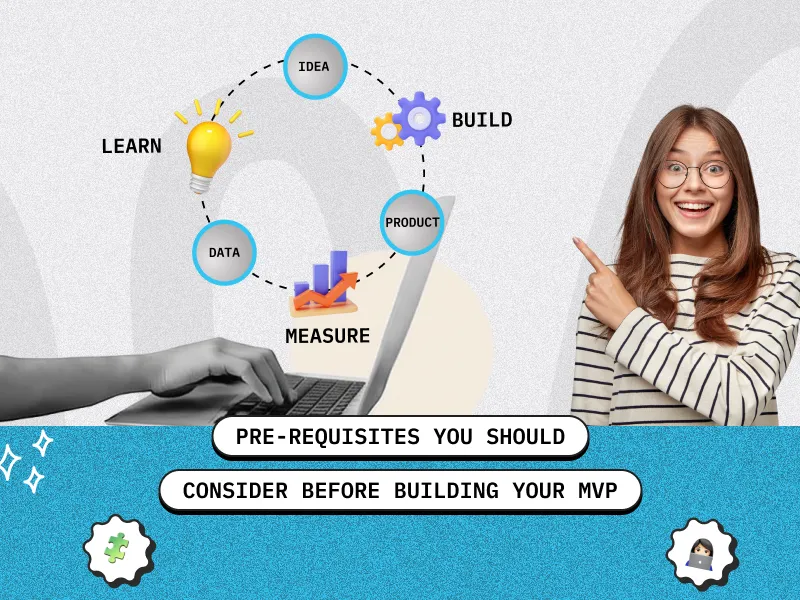

 Canada
 Hong Kong
 Global





 Love we get from the world